A New Way to See What’s Hard
Not too long ago, I gave a talk based on my FEELING Good book. The whole theme was about what we can do to create more happiness and joy in our lives, especially during difficult times.
I started with two tips that may have surprised people:
Accept that life isn’t fair
Allow yourself to feel painful emotions
At first, that can sound a little backwards—“Wait, I came here to feel happier, and you’re telling me to feel sad?” Yes. Exactly.
Because when we honor the tough stuff instead of fighting it, we make space for genuine joy. (If you have my book, you can find these in chapters 1 and 17.)
After sharing those, I let the audience pick which chapter they wanted me to cover next. Someone asked about Chapter 23: Change the Way You View the Things That Bother You.
I lit up—because this one is so powerful.
Here’s the idea: when something painful happens, first ask yourself if there’s anything you can do to change it. If not, then shifting the way you view it can change everything about how you feel.
This came up at just the right time, because right now there’s so much grief in the world—grief from losses we can’t control. And yet, we can control how we view those losses, how we view our lives, and what we choose to focus on.
I know this firsthand. In 1994, my fiancé was diagnosed with a very aggressive form of cancer. When the doctors said that here was nothing left that they could do for him, I spent 42 days and nights by his side in the hospital. We knew the end was near, yet I still prayed for a miracle.
During that time, I found myself clinging to gratitude in the simplest places— with gratitude discovered for myself in the warm comfort of hazelnut coffee the hospital served.
That gratitude carried me through those hospital days, his death, and the unimaginable loss of my father just six weeks later. It didn’t erase the grief. I wasn’t grateful for the loss. But I was grateful for the love around me, for healing walks with my lifelong friend Megan, for the little things that helped me breathe through the pain.
Just as I am today, as I grieve the recent loss of my mother—savoring a simple cup of hazelnut coffee, holding her in my thoughts, and feeling deeply grateful for the lifetime of love she gave me.
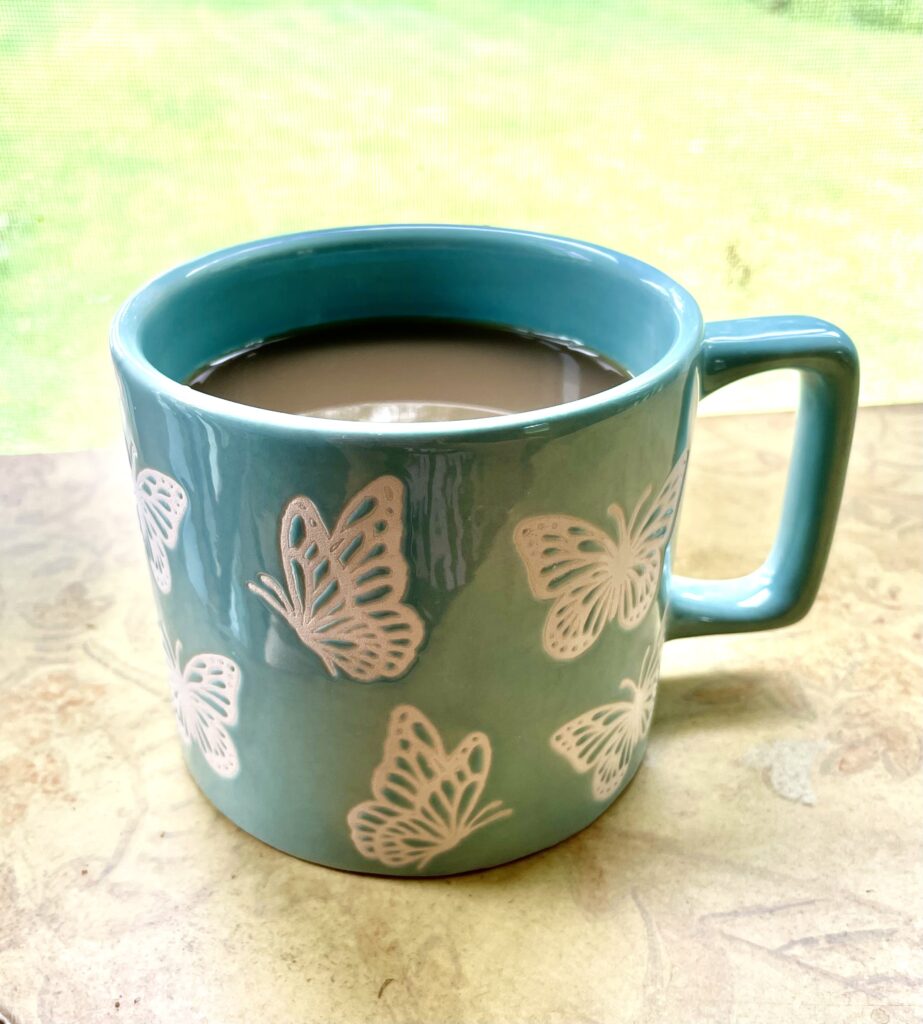
I find myself grateful, too, for the butterfly mug a client gave me after my mother’s passing—with my client not knowing that my mother had cherished butterflies all her life. It feels less like coincidence and more like a quiet thread of love, connecting me with my mother, still.
Gratitude sustained me.
Gratitude transformed me.
Gratitude continues to sustain me and heal grief while not ignoring the grief.
That’s why I always say: gratitude is most powerful on our hardest days. We may not be able to change what’s happened, but we can change the way we view it.
And after we’ve allowed ourselves to grieve, we can begin to ask: What is one small thing I can hold onto with gratitude right now?
So let me ask you: what in your life feels heavy and unchangeable? And what’s one small thing you can shift your view on today?
If you’d like some gentle guidance, I put together a free resource for you: 5 Daily Gratitude Exercises for Healing Grief. These gratitude practices are simple, but they can change the way you experience even your toughest days.
In Gratitude,
Peggy
P.S. If someone you know is going through a hard season right now, please feel free to forward this post. Gratitude is a gift we can share.
P.P.S. If you’re a woman in midlife, I’m doing a free training this week about ambiguous loss in midlife – Silent Sorrows: 10 Hidden Ways Grief Shows Up in Midlife (and How to Heal). Join us inside the free Facebook to attend – Midlife Awakening Sisterhood
Leave a Reply